
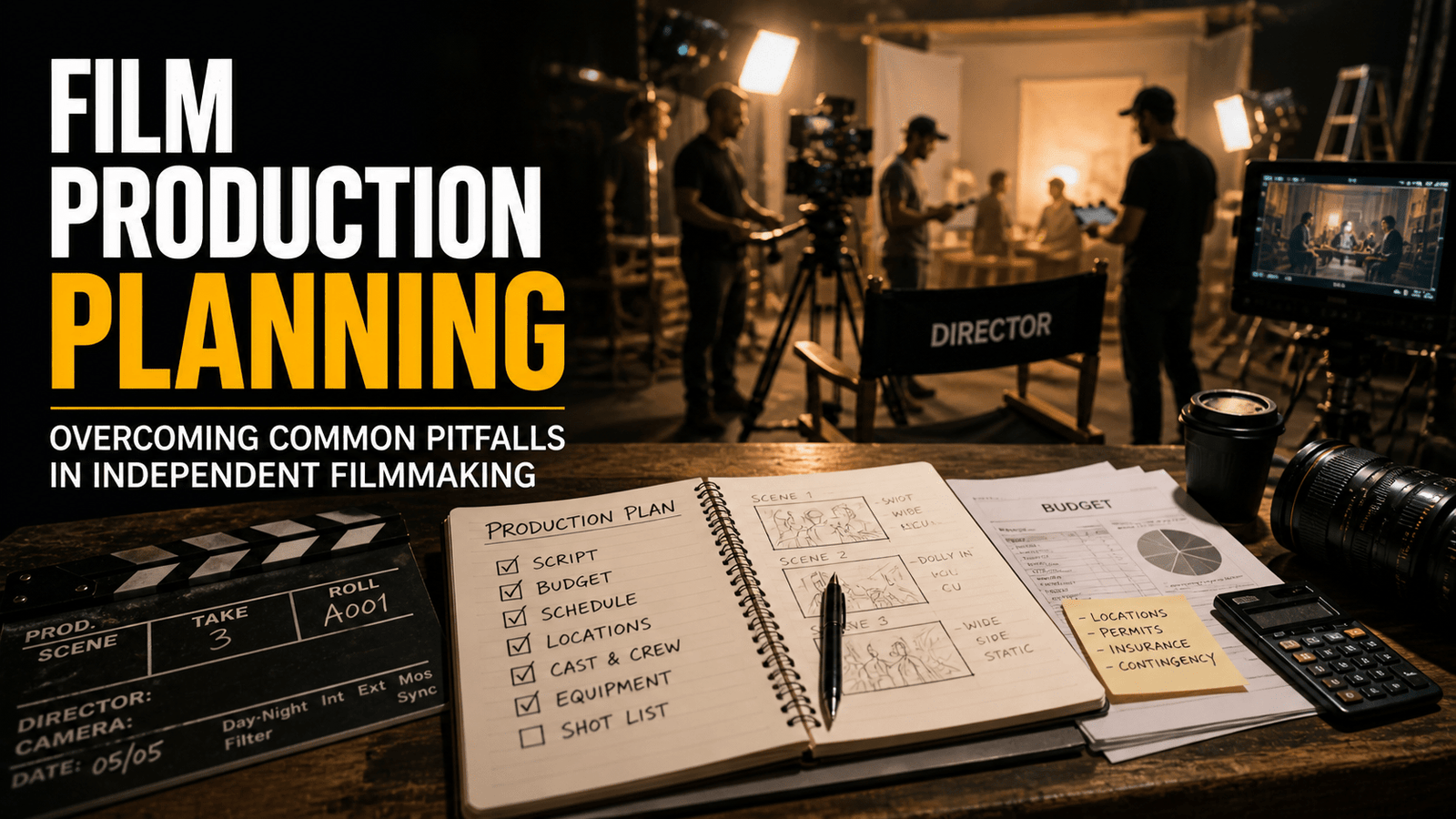



Film Production Planning: Overcoming Common Pitfalls in Independent Filmmaking
Film production planning is the most critical factor in determining whether an independent film succeeds or fails. Many projects struggle not because of creative limitations, but because planning is incomplete, unrealistic, or inconsistent across production stages.
Independent filmmaking requires structured execution. Without clear planning, projects face delays, budget overruns, miscommunication, and compromised final results. A disciplined production plan ensures control from concept to delivery.
Understanding Film Production Planning
Film production planning begins before any filming takes place. It defines the structure, resources, and workflow required to execute the project. This includes scripting, storyboarding, scheduling, budgeting, location planning, and crew coordination.
A strong script provides direction. Storyboarding translates the script into visual planning, allowing filmmakers to identify technical requirements early. This reduces uncertainty during filming and improves overall efficiency.
Scheduling is equally important. A structured timeline ensures that cast, crew, equipment, and locations are available when needed. Without scheduling discipline, production quickly becomes unpredictable.
Realistic Budgeting in Film Production Planning
Budgeting is a core element of film production planning. Independent filmmakers often underestimate costs, leading to financial pressure and production compromises.
A realistic budget must include all production stages, including permits, equipment, crew, post-production, and distribution. Hidden costs and unexpected changes should be anticipated through contingency planning.
Proper budget allocation ensures that critical areas such as sound, cinematography, and post-production maintain professional quality. Weak financial planning often results in compromised execution.
Structured Workflow for Production Efficiency
A structured workflow is essential for executing film production planning effectively. Every stage, from pre-production to post-production, must follow a defined process.
Pre-production establishes the foundation through planning and coordination. Production relies on schedule control, communication, and technical execution. Post-production requires disciplined editing, sound design, and final delivery preparation.
Clear communication between departments ensures consistency across all stages. Without workflow structure, even well-funded projects can fail due to misalignment.
Pre-Production Strategies That Prevent Failure
Disciplined pre-production is the strongest defense against production problems. This phase ensures that the project is technically and creatively prepared before filming begins.
Building the right team is essential. Skilled professionals across camera, sound, lighting, and production design contribute to overall quality. Collaboration must be aligned with the project vision.
Location planning must consider logistics, access, permits, and visual requirements. Securing locations in advance prevents legal and scheduling issues during production.
Rehearsals improve both performance and technical execution. Testing scenes before filming reduces mistakes and improves efficiency on set.
Contingency planning prepares the production for unexpected challenges. Weather changes, technical failures, or scheduling conflicts can be managed effectively when solutions are prepared in advance.
Why Film Production Planning Matters
Film production planning defines the difference between controlled production and disorganized execution. Independent films that succeed are built on structured planning, not improvisation.
At Sunlight Productions Holdings LLC, every project is developed through disciplined film production planning to ensure clarity, consistency, and professional results across all production stages.
Explore our video production services for structured project execution.
For additional industry reference, review film production stages explained.

Film Production Planning: Overcoming Common Pitfalls in Independent Filmmaking
Effective film production planning is the difference between a controlled production and a project that quickly loses direction. Independent films often struggle not because of creative limitations, but because planning is incomplete, inconsistent, or unrealistic.
Every stage of filmmaking depends on preparation. When planning is weak, delays, budget issues, and communication problems begin to affect the entire production process. A structured approach ensures that the project remains organized from concept to final delivery.
Why Planning Defines Production Success
Before filming begins, a project must be clearly defined. This includes the script, visual direction, production scope, and technical requirements. A strong foundation reduces uncertainty and allows the team to focus on execution rather than problem-solving.
Story development is the starting point. A clear script supports consistent decision-making across all departments. Visual planning, including shot lists and scene structure, helps translate ideas into practical execution on set.
Scheduling is equally important. A well-structured timeline ensures that cast, crew, and locations are available when needed. Without scheduling control, even small delays can disrupt the entire production.
Budgeting and Resource Control
Budget planning must be realistic and complete. Independent productions often underestimate costs, leading to financial pressure and reduced production quality.
A reliable budget includes equipment, locations, crew, post-production, and contingency costs. Unexpected issues are common in filmmaking, so flexibility is essential. Proper allocation of resources ensures that key areas such as sound, cinematography, and editing maintain professional standards.
Workflow and Execution
Production requires a clear workflow. Each stage, from preparation to filming and post-production, must follow a defined process.
During filming, coordination between departments is critical. Camera, lighting, sound, and production teams must work within a shared plan. Clear communication reduces mistakes and keeps the production on schedule.
Consistency on set also depends on attention to detail. Continuity, equipment readiness, and time management all contribute to efficient execution. Without structure, production becomes unpredictable and expensive.
Strengthening Pre-Production
Pre-production is where most problems can be prevented. Building the right team, securing locations, and preparing technical requirements in advance improves overall efficiency.
Rehearsals help refine performances and identify technical challenges early. Location preparation ensures that filming can proceed without interruptions. Permits, logistics, and access must be confirmed before production begins.
Planning for potential issues is also essential. Weather, technical failures, and scheduling conflicts can disrupt production. Preparing alternatives in advance allows the team to adapt quickly.
Conclusion
Independent filmmaking requires discipline and structure. Projects that succeed are built on preparation, coordination, and realistic expectations. A controlled production process ensures that creative ideas are supported by practical execution.
At Sunlight Productions Holdings LLC, every project is developed through structured planning, technical control, and consistent execution standards. This approach ensures reliable results across film, music video, and commercial production.
Learn more about our video production services.