
Inspired by light.
Perfected in sound.
Home Project Development – Powered by Sunlight Productions Hearts of Gold Film Ensemble Drama Spiritual Realism Los Angeles
Hearts of Gold film is an ensemble drama that explores presence, attention, and time through the quiet rituals of an unconventional Los Angeles acting studio.
At its core, Hearts of Gold film proposes that transformation is not an event but a practice. The story unfolds inside a small, worn acting studio where Norma, a teacher who values silence over instruction, guides a group of women through exercises in presence. Outside, the world pressures them with money, immigration anxiety, auditions, and family expectations. Inside, time slows. The camera listens. The film breathes.
The Hearts of Gold film was developed as a contemplative ensemble piece that resists narrative urgency and market logic. It aligns more with spiritual realism than traditional drama, trusting silence, repetition, and duration to carry meaning.
“Hearts of Gold centers on a small, unconventional acting studio where a group of women gather under the guidance of Norma, a teacher whose methods emphasize presence, attention, and time rather than performance or career advancement. The film is not about acting success. It is about learning how to be present without escape.”
Hearts of Gold film follows a group of women who arrive at Norma’s acting studio from different circumstances: displacement, anxiety, immigration uncertainty, pregnancy, and fear of failure. Outside the studio, the world pressures them relentlessly. Inside, sand clocks, music, breathing, and duration structure the sessions. Exercises dismantle habit and control, revealing vulnerability without spectacle. The film contrasts this quiet space with the commercial urgency of a neighboring studio where ambition dominates. There is no final performance, no triumph, no external validation. The film closes with continuation—time passing, attention intact, relationships softened.
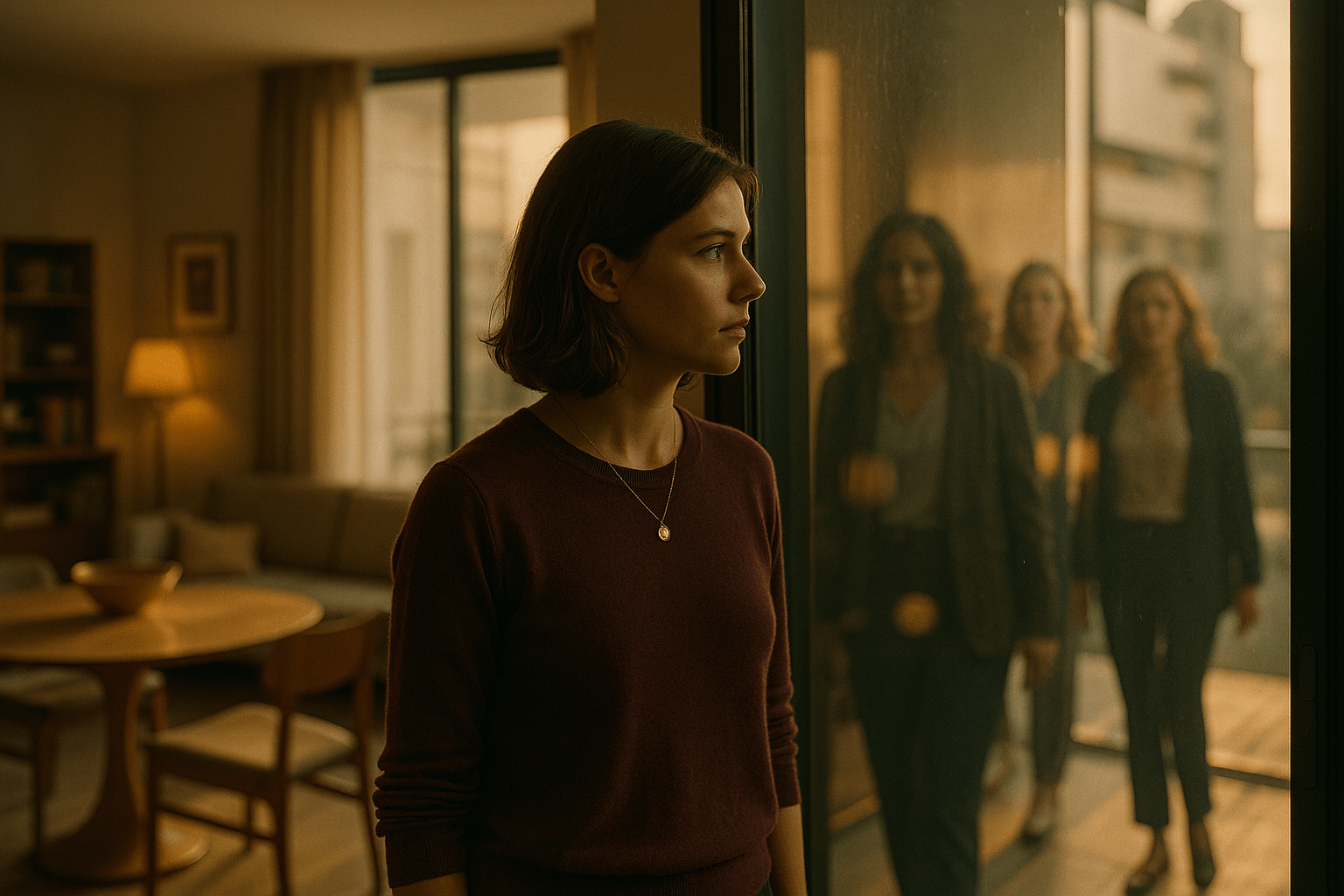
Norma runs the Hearts of Gold Acting Studio, a quiet, worn, almost invisible space in Los Angeles. Her teaching is unorthodox: she values silence, stillness, repetition, and attention over technique, performance, or competition. A group of women arrive—Marine, navigating displacement; Lucy, guarded by humor; Ana, suspended in immigration uncertainty; Alina, pregnant and afraid of losing herself. Parallel scenes contrast this space with the commercial Sugar Free Acting Studio, where ambition and transactional relationships dominate. As sessions deepen, resistance gives way to surrender. Emotional breakthroughs occur quietly: tears without explanation, confessions without framing, presence without resolution. Norma herself is revealed not as a guru, but as a human guide who listens more than she instructs. The film closes on continuation—time passing, attention intact.
The film adopts an observational, patient aesthetic.
The visual language supports the story quietly, allowing silence and presence to carry the emotional weight.
Teacher, time-keeper, facilitator. She does not dominate the narrative but anchors it. Her authority comes from restraint and listening rather than instruction. She is revealed as a human guide, not a guru.
Navigating displacement and fear of failure. Her journey reveals how attention can anchor a person unmoored by circumstance.
Guarded by humor and anxiety. Her defenses slowly dissolve through repetition and ritual.
Suspended in immigration uncertainty. The studio becomes a space where her identity is not defined by legal status.
Pregnant and afraid of losing her identity. Her arc explores whether presence can coexist with profound life change.
The ensemble functions as a shared consciousness, not a hierarchy. Each woman represents a distinct relationship to fear, time, and ambition. None is privileged narratively. Their arcs are internal, subtle, and unresolved by design.
Hearts of Gold film emerges from a belief that cinema can be a space of attention rather than distraction. I am interested in what happens when we remove plot escalation, competition, and external validation from the frame. What remains is presence. The acting studio becomes a sanctuary where women learn not how to perform, but how to be present without escape. Norma is not a guru. The exercises are not therapy. The film does not promise transformation. It offers something quieter: the possibility that time, when shared with attention, can soften the edges of fear. This is a confidence film. It demands patience and trust—but rewards them with coherence and rare authenticity.
Dialogue is minimal, fragmented, and often secondary to silence. Meaning arises through duration, repetition, and non-verbal behavior. The tone is observational, calm, and restrained. There is no satire, no irony, no inspirational framing. Silence functions as narrative driver. The camera listens. The film breathes.
Hearts of Gold film is intended for audiences drawn to contemplative cinema, ensemble drama, and spiritual realism. The film occupies a rare space—American in setting, European in sensibility. It shares DNA with works that trust silence, value presence over plot, and allow meaning to accumulate through attention rather than exposition.
Contemplative ensemble cinema continues to find devoted festival audiences. Resources from British Film Institute document the enduring international appetite for humanist, observational filmmaking.
The screenplay is currently in development, supported by a complete creative and visual package. Available upon request:
Films prioritizing presence and ritual over plot have demonstrated strong festival traction. Locarno Film Festival programming reflects ongoing commitment to director-driven, contemplative cinema.
The viewing experience of Hearts of Gold film is designed to be immersive and patient. Meaning accumulates through attention rather than information. The film invites the audience to slow down, observe, and inhabit the space alongside the characters. There is no climax, no resolution, no catharsis. There is continuation. Time passes. Attention remains.
Sunlight Productions is seeking co-production partners and development financing for this feature film project.