


Superstitious Man Feature Film
Psychological drama written and directed by Aleksandar Adzic
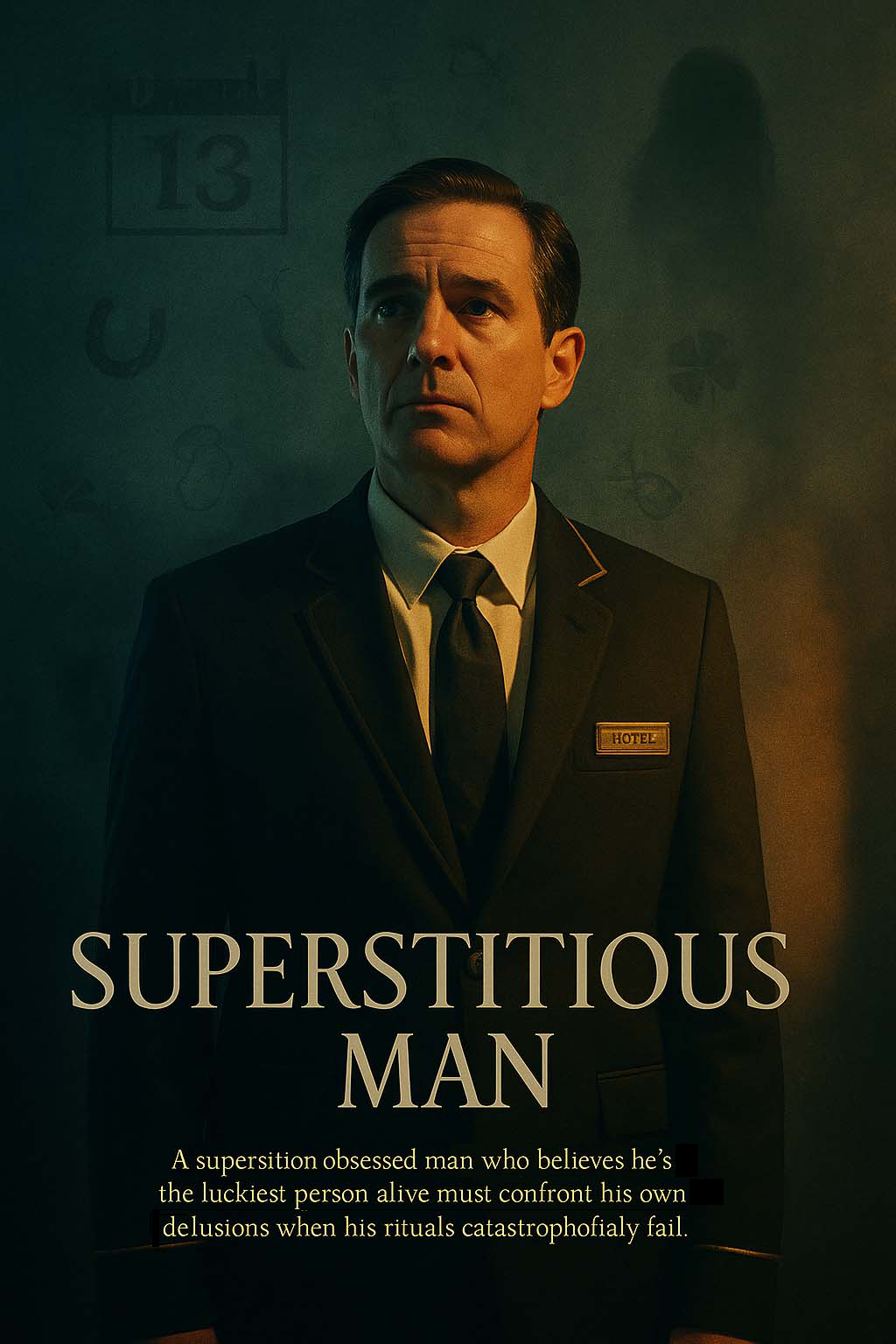
The story follows Michael Gerard Murphy, a hotel operations manager whose life is defined by routine,
structure, and control. When a call from Ireland forces him to return to his coastal hometown,
the systems he depends on begin to collapse.Supported by
Sunlight Productions Holdings LLC
,
Superstitious Man Feature Film explores how superstition can function as logic
when fear becomes internalized. Memory, ritual, and inherited belief shape Michael’s behavior
long before he is willing to acknowledge their influence.
- Psychological drama developed for international festival programming
- Mythic realism rooted in location, behavior, and atmosphere
- Character-driven narrative with restrained visual language
Faith is the fear we decide to trust.
Story Overview of Superstitious Man Feature Film
In Superstitious Man Feature Film, Michael believes order provides safety.
His professional life rewards precision and repetition, yet that stability proves fragile.
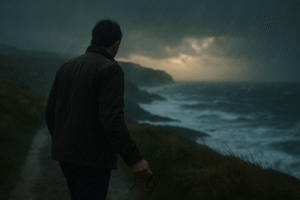
When his mother warns him about something she calls the cry, he returns to Ireland
and enters a landscape shaped by memory rather than certainty.
Superstition in the film is not theatrical or exaggerated.
It exists in daily actions, repeated gestures, and unspoken rules.
Michael does not fully believe in these rituals, but he relies on them
because they offer the appearance of control.
The film avoids direct explanations.
What Michael experiences may be grief, memory, or something more ambiguous.
Superstitious Man Feature Film allows that uncertainty to remain unresolved.
The narrative follows a gradual movement away from control toward acceptance.
Change does not arrive through revelation, but through exhaustion.
By morning, release is understood not as defeat, but as necessity.
Cinematic Language
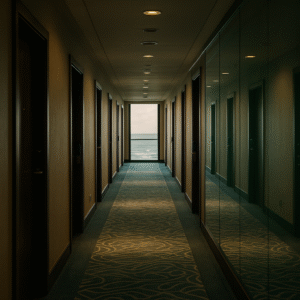
The visual language of Superstitious Man Feature Film progresses in stages.
Early scenes emphasize symmetry, clean lines, and controlled movement.
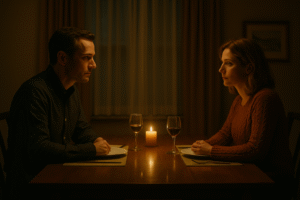
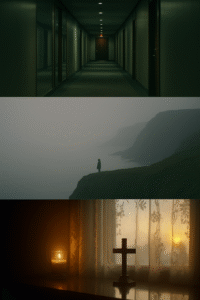
As the story develops, the image softens through fog, candlelight,
and reduced contrast.
Camera movement becomes more intimate over time.
Reflections, windows, and corridors carry narrative weight without dialogue.
Sound design prioritizes natural elements, allowing silence
to shape emotional response.
Audience and Positioning
Superstitious Man Feature Film is intended for audiences
interested in character-driven psychological drama.
The film favors restraint over spectacle and assumes an attentive viewer.
Its pacing and structure align with international festival programming
focused on atmosphere, performance, and thematic clarity
rather than genre mechanics.
Cultural context includes
Irish folklore
and the tradition of
psychological drama
.
Director Statement
Aleksandar Adzic approaches Superstitious Man Feature Film
as an examination of how people organize fear.
The story draws from lived experience shaped by discipline,
ritual, and inherited belief.
The film does not attempt to define superstition as true or false.
Instead, it observes how belief operates
when grief and uncertainty require structure.
Production Snapshot
- Title: Superstitious Man Feature Film
- Format: Feature film
- Genre: Psychological drama
- Visual approach: Controlled realism shifting toward atmosphere
- Core themes: Control, belief, release
Resources and Contact